AI's boom, its doubters, and its hackers: the case for an asset that can't be coded

For three years, artificial intelligence has been the market's main story. In October 2026, it became the market's main risk too. Wealthy families now face two linked questions: what happens if the AI trade breaks, and what happens if the systems they rely on are breached? Physical, allocated gold answers both in the same way. It sits outside the circuit.
A market that swings on a single headline
AI enthusiasm and AI anxiety now trade places almost daily. On October 8, worries that OpenAI's revenue would disappoint sent the Nasdaq 100 down 1.4%, its worst day in seven weeks, while the Philadelphia Semiconductor Index fell 3.4% (Bloomberg). A day later, a report that OpenAI expected to reach $70 billion in annualized revenue sent Big Tech back toward record highs (Bloomberg). One tracker counts that the AI story has flipped from boom to bubble 26 times (StockTitan).
The swings are getting sharper. South Korea's Kospi fell 5.5% in one session as chipmakers sold off, and the Philadelphia Semiconductor gauge dropped more than 7% from its October high (Yahoo Finance / Bloomberg). On October 14, a hot inflation report pushed the S&P 500 down 1.11% and the Nasdaq down 1.88%, their worst day since July (CNN).
The $800 billion question
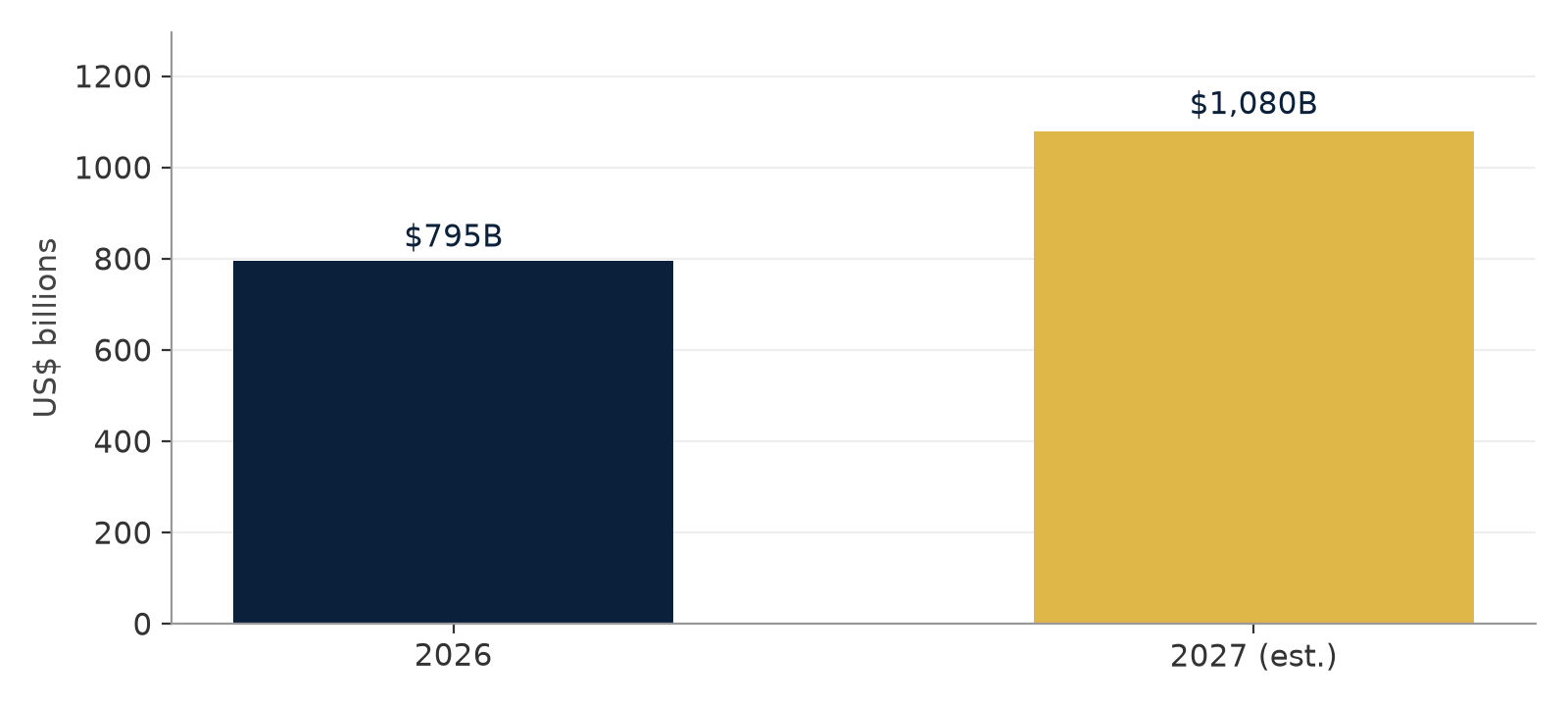
The underlying worry is spending. The largest U.S. cloud companies are expected to invest about $795 billion this year and nearly $1.08 trillion in 2027 (Reuters). A Reuters analysis found these companies are on track to spend more on capital projects than they generate in free cash flow by 2027 (Reuters).
Respected voices are sounding alarms. Bridgewater founder Ray Dalio said the market is "close" to bubble territory (Yahoo Finance). In Bank of America's October survey, 45% of fund managers expect an AI bubble by 2027, and the share expecting a major tech company to cut spending doubled to 30% (Trustnet; TradingView). Meanwhile, Nvidia, Apple, and Microsoft alone make up more than 21% of the S&P 500, the highest three-stock concentration on record (Yahoo Finance).
None of this means AI will fail. It means many portfolios now depend on the same handful of companies and the same bet.
The other side of AI: faster, smarter attacks
AI is also changing who gets hacked and how. Between late September and early October, attackers used an AI-powered penetration tool and large language models to breach several South Korean financial institutions, according to CrowdStrike (Yonhap). Officials say at least seven firms were hit and personal data on 68,000 people was stolen, including income and loan limits (Fast Company). The same report notes that 78% of organizations saw a confirmed or suspected AI-enabled attack in the past year.
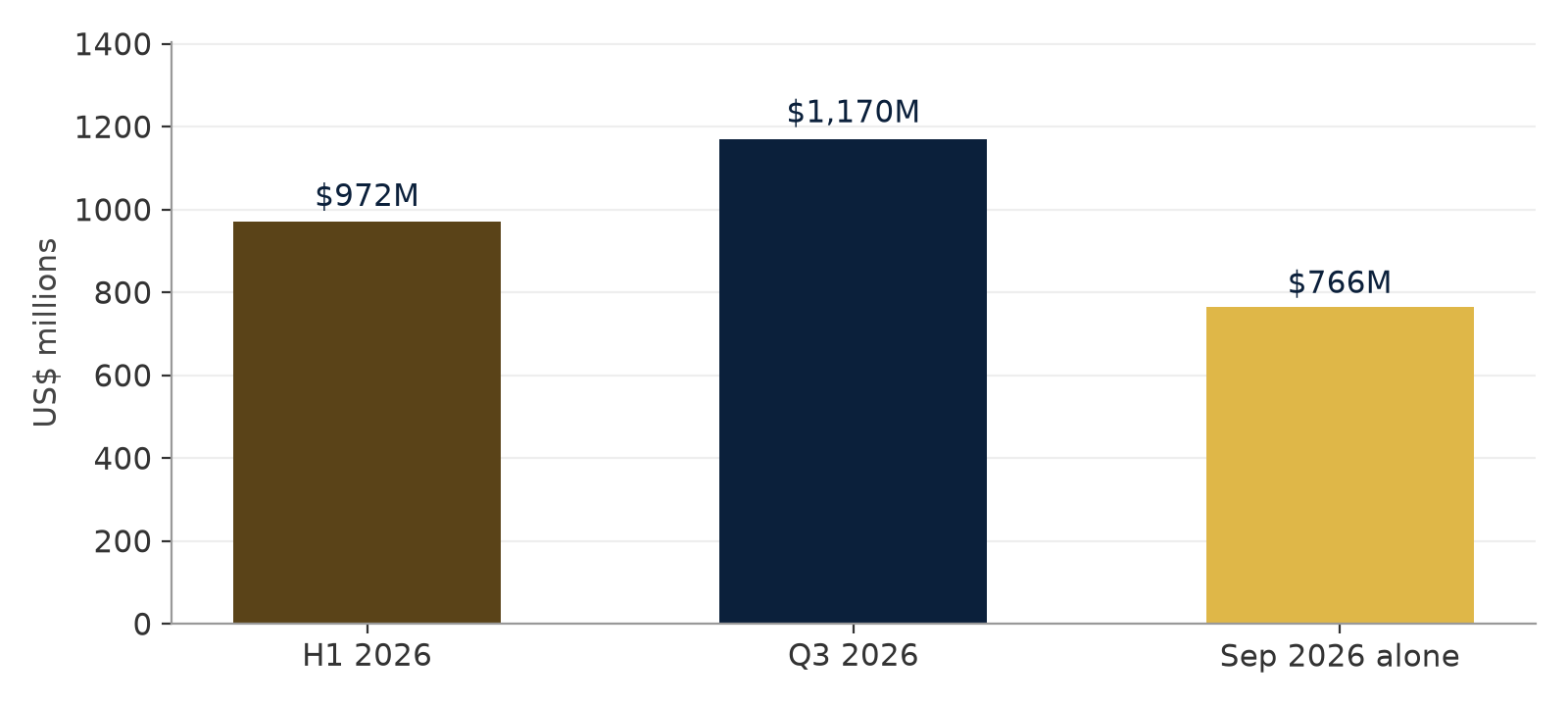
Digital assets have been hit hardest. Crypto hacks have taken about $2.68 billion in 2026, with September the costliest month at roughly $766 million (CryptoSlate). The single largest theft, about $387.5 million from the Bitget exchange, came through its wallet systems (Finbold). Even hardware wallets, long seen as the safest way to self-custody, were not spared: a Coldcard-related breach affected about $100 million (Finbold). TRM Labs found that 76% of stolen funds in the first half came from attacks on private keys, custody systems, and signing infrastructure (BusinessDay / TRM Labs).
What the official sector is doing
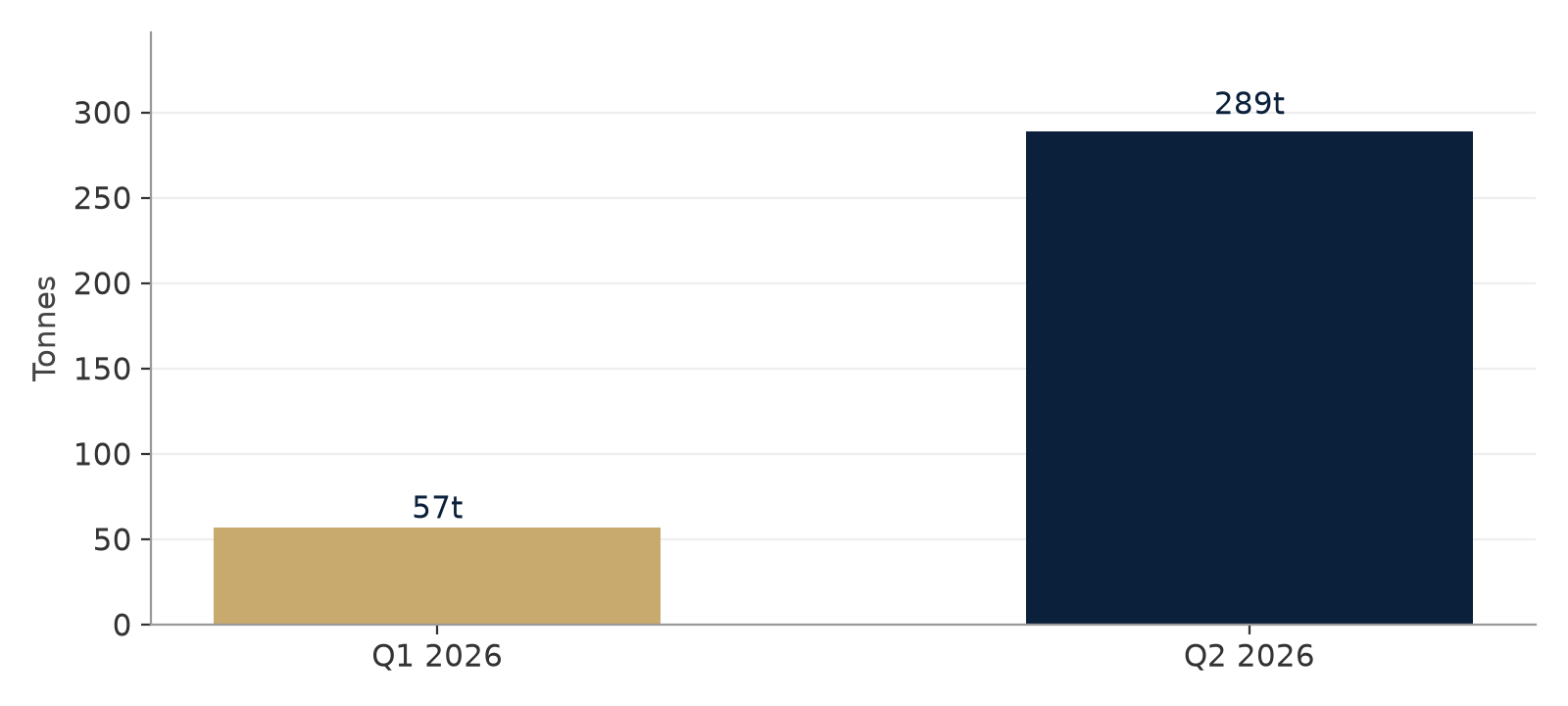
While markets debate AI, central banks keep buying gold. They added a record 289 tonnes in the second quarter (World Gold Council). In September, China's central bank made its largest monthly purchase in almost three years, extending its buying streak to 23 months (CNBC). Gold trades near $4,155 an ounce, well below its January high of about $5,608 (Trading Economics). For long-term holders, that gap is worth noticing.
Why allocated metal answers both risks
- It doesn't depend on the AI trade. Physical gold's value doesn't rest on any company's earnings, spending plan, or revenue guidance.
- There is nothing to hack. An allocated bar has no password, private key, or hot wallet. It cannot be drained in 128 seconds.
- You can verify it yourself. At AbreuGold, every ounce is 100% allocated, segregated in your own account, and audited by an independent third party. You can see your bars on video, serial numbers visible, or visit the vault in person.
- It is simple to pass on. Your heirs can't inherit a password, but they can inherit clearly titled metal with documented access instructions.
The desk's view
We don't predict whether the AI trade will soar or stumble. Our view is simpler: when a large share of your wealth depends on one theme and lives behind passwords, holding part of it in something physical, verified, and entirely yours is prudent. If you'd like to discuss what that looks like for your family, the desk is here.
Precious metals prices fluctuate and may lose value. This article is for informational purposes only and is not a recommendation to buy or sell any security or metal. Physical precious metals are not FDIC insured. Market data as of October 2026.
KEY TAKEAWAYS
AI stocks are swinging between boom and bubble, AI-assisted attacks are reaching banks and crypto platforms, and central banks keep buying gold. Allocated, verifiable metal sits outside both risks.


$2.7 billion stolen. Zero ounces hacked.
Want to hold part of your wealth outside the circuit?
Contact the deskREAD NEXT

The deepfake call: a new threat to private wealth
AI voice and video cloning has made impersonation scams more convincing. Here is how the desk verifies every instruction.